
BMI Calculator
HEALTH & BODY · FREE TOOL
- US Imperial & Metric units supported
- Based on CDC & WHO guidelines
- Shows healthy weight range for your height
- Includes BMI category breakdown & health notes
Home → Health & Body → BMI Calculator
BMI Calculator
Calculate your Body Mass Index instantly — no sign-up required
<18.5 Normal
18.5–24.9 Overweight
25–29.9 Obese
30+
| BMI Category | BMI Range | Your Status |
|---|---|---|
| 🔵 Underweight | < 18.5 | |
| 🟢 Normal Weight | 18.5 – 24.9 | |
| 🟡 Overweight | 25.0 – 29.9 | |
| 🔴 Obese Class I | 30.0 – 34.9 | |
| 🔴 Obese Class II | 35.0 – 39.9 | |
| 🔴 Obese Class III | ≥ 40.0 |
BMI is a screening tool, not a medical diagnosis. Results may vary based on age, sex, muscle mass, and ethnicity. Always consult a healthcare provider for personalized guidance.
How to Use This BMI Calculator
- Choose your unit system: US/Imperial (feet, inches, pounds) or Metric (cm, kg).
- Enter your age: BMI interpretation can vary slightly by age group.
- Select your gender: biological sex affects healthy BMI context.
- Enter your height and weight: use your most recent measurements.
- Click “Calculate My BMI” your score, category, healthy weight range, and BMI Prime appear instantly.
Note: BMI is a screening tool based on CDC and WHO guidelines. It does not directly measure body fat or account for muscle mass. Always consult a healthcare provider for a full health assessment.
BMI Categories at a Glance
| BMI Range | Category |
|---|---|
| Below 18.5 | Underweight |
| 18.5 – 24.9 | Normal Weight |
| 25.0 – 29.9 | Overweight |
| 30.0 – 34.9 | Obese — Class I |
| 35.0 – 39.9 | Obese — Class II |
| 40.0 and above | Obese — Class III |
Source: CDC / WHO adult BMI guidelines
What Is BMI and What Does Your Number Actually Mean?
Body Mass Index (BMI) is a numerical value calculated from a person’s height and weight. It was developed in the 1830s by Belgian mathematician Adolphe Quetelet and has been adopted by the CDC, WHO, and NIH as a standard population-level screening tool for weight status.
The formula is simple:
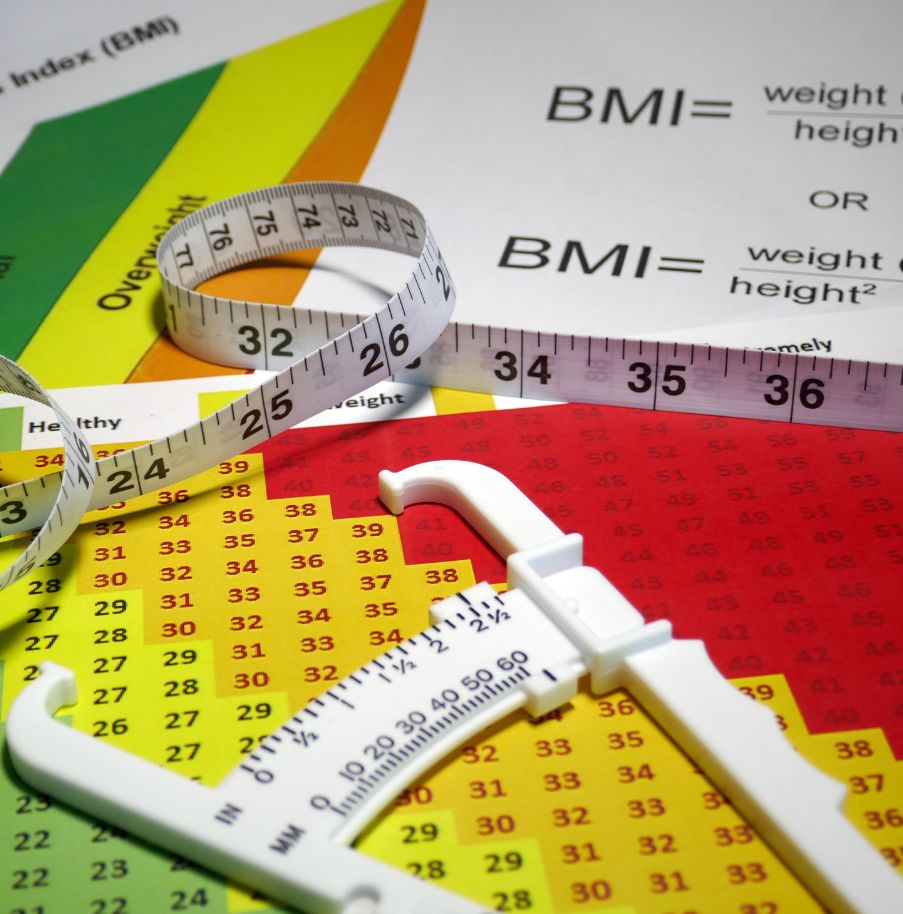
BMI = weight (kg) ÷ height (m)²
In US units: BMI = [weight (lbs) ÷ height (in)²] × 703
The resulting number places you into one of four main categories Underweight, Normal Weight, Overweight, or Obese which are used by healthcare providers as a starting point for evaluating potential weight-related health risks.
What BMI is good at: It is quick, free, noninvasive, and strongly correlated with body fat levels for roughly 90–95% of the general population. It is the same tool used in large-scale public health research, including the CDC’s Adult Obesity Maps.
What BMI doesn’t capture: It does not distinguish between fat, muscle, and bone mass. A muscular athlete and a sedentary person of the same height and weight will have the same BMI, but very different body compositions and health profiles. BMI also does not indicate where in the body fat is stored abdominal fat carries greater health risk than fat stored in other areas.
For a more complete picture, BMI should be considered alongside waist circumference, body fat percentage, medical history, and lifestyle factors.
BMI Stats
Understanding Your BMI Results
Underweight (BMI below 18.5)
Normal Weight (BMI 18.5 – 24.9)
A BMI in the normal range is associated with the lowest risk of weight-related chronic diseases. However, BMI is not the only measure of health a person in this range can still have poor cardiovascular fitness, high blood pressure, or unhealthy body composition. Maintaining this range through a balanced diet and regular physical activity is one of the best things you can do for long-term health.
Overweight (BMI 25.0 – 29.9)
Being overweight increases the risk of type 2 diabetes, high blood pressure, high cholesterol, sleep apnea, and certain cancers. However, the health impact varies significantly based on where body fat is distributed, activity level, and other metabolic factors. Many people in the overweight category are metabolically healthy and can reduce risk substantially through lifestyle changes even modest weight loss of 5–10% of body weight produces meaningful health benefits.
Obese Class I (BMI 30.0 – 34.9)
Obese Class II & III (BMI 35.0+)
What Is BMI Prime?
Does BMI Differ for Men, Women, and Older Adults?
The standard BMI formula and categories (set by the CDC and WHO) are the same for adult men and women. However, research consistently shows that women naturally carry a higher percentage of body fat than men at the same BMI, due to differences in hormones, muscle mass distribution, and reproductive biology. This means that at the same BMI, a man may have more lean muscle mass while a woman has more fat tissue yet both fall in the “normal” category.
For older adults, BMI can underestimate health risks. As people age, muscle mass naturally decreases (a process called sarcopenia) and body fat tends to increase even without any change in weight. An older adult at a BMI of 24.0 may have significantly more body fat than a younger adult at the same BMI.
For athletes and bodybuilders, BMI frequently misclassifies very muscular individuals as overweight or obese, since muscle weighs more than fat. In these cases, body fat percentage measurement (via DEXA scan, hydrostatic weighing, or skinfold calipers) is a more meaningful metric.
For children and teens (ages 2–19), BMI is calculated the same way but interpreted differently using age and sex-specific percentile charts, not fixed category cutoffs. Our calculator is designed for adults 20 and older.
BMI vs. Other Body Composition Measures
| Measure | What It Measures | Pros | Cons |
|---|---|---|---|
| BMI | Weight-to-height ratio | Free, fast, universal | Doesn’t measure fat directly |
| Waist Circumference | Abdominal fat | Predicts heart disease risk | Doesn’t account for height |
| Waist-to-Hip Ratio | Fat distribution | Good cardiovascular predictor | Less standardized |
| Body Fat % | Actual fat tissue | Most direct measure | Requires equipment or testing |
| DEXA Scan | Full body composition | Gold standard accuracy | Expensive, not widely available |
BMI Calculator: Frequently Asked Questions
What is a normal BMI?
According to the CDC and WHO, a normal (healthy) BMI for adults is between 18.5 and 24.9. A BMI below 18.5 is considered underweight, 25.0–29.9 is overweight, and 30.0 or above is classified as obese. These ranges apply to adults aged 20 and older, regardless of age or sex.
What is a good BMI for a woman?
The healthy BMI range for adult women is the same as for men 18.5 to 24.9 according to CDC guidelines. However, because women naturally carry more body fat than men at the same BMI, some researchers suggest that a BMI of 21–23 may be optimal for women. Always consider BMI alongside other health markers and consult your healthcare provider for personalized guidance.
What is a good BMI for a man?
The healthy BMI range for adult men is 18.5 to 24.9. Because men typically have higher muscle mass than women, they may be able to maintain a BMI toward the upper end of the normal range (23–24.9) without excess body fat. Athletes and very muscular men may have a BMI above 25 while still having a healthy body composition.
How do I calculate my BMI?
In metric units: divide your weight in kilograms by your height in meters squared (BMI = kg ÷ m²). In US units: divide your weight in pounds by your height in inches squared, then multiply by 703 (BMI = [lbs ÷ in²] × 703). For example, a person who is 5’9″ (69 inches) and weighs 160 lbs has a BMI of: [160 ÷ (69 × 69)] × 703 = 23.6 — which falls in the Normal Weight range. Or simply use the free calculator above.
What BMI is considered obese?
A BMI of 30.0 or above is classified as obese by the CDC and WHO. Obesity is further subdivided into three classes: Class I (BMI 30–34.9), Class II (BMI 35–39.9), and Class III, also called severe or morbid obesity (BMI 40 and above). Each class carries progressively higher risk of weight-related health conditions.
Is a BMI of 25 overweight?
Yes, technically a BMI of 25.0 marks the beginning of the overweight category according to CDC guidelines. However, a BMI of exactly 25 is right at the boundary, and for many people particularly those with higher muscle mass this number does not indicate health risk. BMI should be interpreted in the context of your overall health, body composition, and lifestyle.
What BMI is considered overweight?
A BMI of 25.0 to 29.9 is classified as overweight. Being overweight increases the risk of type 2 diabetes, high blood pressure, heart disease, and certain cancers. However, the health impact varies by individual — factors like physical fitness, diet, waist circumference, and family medical history all matter.
What is a healthy weight for my height?
A healthy weight corresponds to a BMI of 18.5–24.9 for your height. For example: at 5’4″ (163 cm), healthy weight is 108–145 lbs. At 5’9″ (175 cm), it is 125–168 lbs. At 6’0″ (183 cm), it is 140–188 lbs. Our calculator shows your personal healthy weight range immediately after calculating your BMI.
What is BMI Prime?
BMI Prime is a simple ratio of your BMI to 25 (the upper limit of normal weight). A BMI Prime of less than 1.0 means you are at or below healthy weight. A BMI Prime of exactly 1.0 equals a BMI of 25. A BMI Prime of 1.20 means your BMI is 20% above the healthy upper limit (equivalent to a BMI of 30). It makes it easy to understand how far above or below the healthy range you are.
Can you have a high BMI and still be healthy?
Yes, BMI is a population screening tool, not a definitive health diagnosis. Some people with a BMI above 25 or even 30 are metabolically healthy, with normal blood pressure, cholesterol, and blood sugar. Conversely, some people with a normal BMI can be metabolically unhealthy. This is sometimes called the “obesity paradox” or “normal weight obesity.” BMI is best used as one piece of information alongside blood work, physical activity, diet quality, and medical history.
Does BMI change with age?
The BMI formula and category cutoffs do not change with age for adults. However, body composition naturally shifts with age older adults tend to have less muscle mass and more body fat at the same BMI than younger adults. Some health organizations suggest that slightly higher BMIs (up to 27) may be acceptable for adults over 65, though this varies by clinical guideline.
What is a healthy BMI for seniors (over 65)?
Some research and clinical guidelines suggest that a BMI of 23–27 may be appropriate for older adults (65+), slightly higher than the standard 18.5–24.9 range. This is because being underweight in older age carries significant health risks including increased fracture risk and mortality and some extra body weight can provide a buffer during illness. However, recommendations vary, and older adults should discuss their individual target weight with a physician.
What is PMI and how do I avoid it?
Private Mortgage Insurance (PMI) is required by most lenders when your down payment is less than 20% of the home’s purchase price. It protects the lender not you if you default. PMI typically costs 0.3%–1.9% of the loan amount annually. You can avoid PMI by putting 20% or more down, by using a piggyback loan (80/10/10), or by waiting until your loan-to-value ratio drops to 80% and requesting its removal.
What is BMI for children?
BMI is calculated the same way for children as for adults, but it is interpreted using age- and sex-specific percentile charts rather than fixed category cutoffs. This is because body fatness changes as children grow and differs between boys and girls. A BMI at or above the 95th percentile for age and sex is classified as obese; between the 85th and 95th percentile is overweight. The CDC provides separate BMI calculators and growth charts for children ages 2–19. Our calculator is designed for adults 20 and older.
What are the limitations of BMI?
BMI has several well-documented limitations: (1) It does not directly measure body fat, it measures weight relative to height. (2) It cannot distinguish between fat and muscle, leading to misclassification of athletes. (3) It does not indicate where fat is stored in the body, abdominal fat is more dangerous than fat elsewhere. (4) It does not account for racial and ethnic differences in body composition. For example, Asian populations have higher health risk at lower BMI thresholds, and the WHO has proposed lower cutoffs (23 for overweight, 27.5 for obese) for Asian adults. (5) It underestimates health risk in older adults who have lost muscle mass.
Quick Answers: BMI at a Glance
What is the BMI formula?
BMI = weight (kg) ÷ height (m)². In US units: BMI = [weight (lbs) ÷ height (in)²] × 703. Example: a person weighing 160 lbs at 5’9″ (69 in) has a BMI of [160 ÷ 4761] × 703 = 23.6 (Normal Weight).
What BMI is overweight for a man at 5'10"?
What is a healthy BMI range?
What is the BMI for a 200-pound person at 5'10"?
What BMI is overweight for a woman at 5'4"?
What BMI is considered overweight?
The History of BMI. From 19th Century Statistics to Global Health Standard
The Body Mass Index was not invented by doctors — it was created by a mathematician. Belgian statistician Adolphe Quetelet developed the formula in the 1830s as part of his effort to define the “average man” across a population. Originally called the Quetelet Index, it was never intended as a clinical tool for individual health assessment.
For over a century, it remained an obscure statistical concept. That changed in the 1970s, when physiologist Ancel Keys famous for his research linking diet to heart disease published a landmark study comparing different weight-to-height indices across populations. Keys concluded that Quetelet’s formula was the most reliable simple measure of adiposity and coined the term “Body Mass Index” in 1972.
The medical community quickly adopted it. By the 1980s, major health organizations including the NIH and WHO had incorporated BMI into clinical guidelines. In 1998, the NIH lowered the U.S. overweight threshold from BMI 27 to BMI 25, overnight reclassifying approximately 29 million Americans as overweight without any change in their actual weight.
Today, BMI is used in virtually every country as a population health metric, insurance classification tool, and clinical screening instrument. It is the foundation of the CDC’s Adult Obesity Maps and dozens of major epidemiological studies. Despite its limitations particularly its inability to distinguish fat from muscle it remains the most accessible, inexpensive, and widely validated weight screening tool available.
Research continues to refine how BMI should be interpreted across different populations. In 2023, the American Medical Association updated its policy to recognize that BMI is an imperfect measure, recommending it be used alongside additional measures like waist circumference, body composition, and cardiometabolic risk factors for a more complete clinical picture.
Free Calculators App 100% Free.
No Sign-Up. No Hidden Costs.
Every calculator on this site is free forever. We never charge subscription fees or sell your data. Results are educational estimates always confirm important financial decisions with a licensed professional.